

Competitive Bidding Round 2028
The Medicare Competitive Bidding Program (CBP) national Remote Item Delivery (RID) model would dramatically reshape access to essential ostomy and urological supplies, CGMs, insulin infusion pumps, and off-the-shelf braces, significantly reducing supplier participation and market structure.
New Legislation
House Legislation Introduced to Delay Inclusion of Ostomy & Urological Supplies in CBP
Reps. Greg Murphy, M.D. (R-NC) and Brad Schneider (D-IL) introduced the Access to Medical Supplies Act, H.R. 10787, bipartisan legislation on Oct. 9, 2026, that would pause the inclusion of ostomy and urological supplies in the Medicare Competitive Bidding Program (CBP) for five years, giving the Centers for Medicare & Medicaid Services (CMS) time to engage with stakeholders and fully analyze how the change would affect end user access to care. The bill also creates a technical expert panel to study the impact of adding these supplies to the program and a demonstration project to test the effects before CMS makes a final decision.
Take Action
Now is the time to call your member of Congress AND send an email using our Voter Voice.

Contact Congress
Contact your Member of Congress to discuss the affects the Remote Item Delivery (RID) CBP will have on your business and ask for their co-sponsorship of HR 10787, which would:
- Delay the inclusion of these products in CBP for five years
- Establish a Technical Expert Panel to evaluate the impact before inclusion
- Require a demonstration project to assess real-world implications
Share the Issue Brief; see talking points below.

Engage Key Stakeholders
Contact the NFIB and SBA on how CBP will impact your business, and encourage them to make this a priority issue.
See our Small Business page for guidance.

Multiply Your Impact
Help end users, family caregivers, and communities understand CBP and take action. Share these resources:
- UOAA Webinar — panelist roundtable featuring clinicians, HME industry, and consumer advocates discussing CBP's impact
- HighCostofLowBids.org — ostomates and catheter users can email Congress
- Advocacy for people with diabetes — people with diabetes can get involved in The Diabetes Patient Advocacy Coalition
- Follow allied consumer groups on social — DPAC, UOAA, Spina Bifida Association, and United Spinal Association
H.R. 10787 Talking Points
- Ostomy and urological supplies are not one-size-fits-all. Patients often depend on a specific product design, material, and size that works for their body. The wrong product can lead to serious complications such as skin breakdown, antibiotic-resistant urinary tract infections, and hospitalization, and life-threatening sepsis.
- Limiting product choices and cutting off access to knowledgeable suppliers puts patient health at risk while generating little meaningful savings for the Medicare program.
- 47% of suppliers who provide these products report that the RID CBP model poses a significant business viability risk for closing locations or closing entirely, exacerbating access issues well beyond Medicare Part B beneficiaries.
New Survey Data: Suppliers Warn of Closures & Layoffs Under RID Competitive Bidding
AAHomecare conducted a nationwide survey in August 2026 to assess how the Round 2028 Remote Item Delivery (RID) Competitive Bidding Program would affect impacted DMEPOS supplier operations if they do not receive a contract. A total of 306 companies, representing more than 1,500 locations, participated in the survey, providing a broad view of projected business responses. The results point to significant potential disruption to businesses, jobs, and patient access to care:
- 50% of respondents said they would reduce their workforce without a CBP contract, with an average anticipated reduction of 34% of staff among those who provided an estimate. More than one in three companies said they would eliminate at least half their workforce.
- 47% reported at least one significant business risk — closing one or more locations, a high risk of going out of business, or closing entirely — if they don't receive a contract.
- More than half of respondents operate from a single location, and 77% have four or fewer locations, underscoring the impact a nationwide RID model would have on community-based suppliers.
- 68% of respondents rely on the affected product categories as either their primary business or a significant portion of their business.

AAHomecare in Action
How AAHomecare is Advancing the Issue: AAHomecare is expanding the HME community's impact through a multi-channel effort across federal agencies, Congress, and public awareness, in coordination with allied stakeholder groups including the ITEM Coalition, UOAA, United Spinal Association, Spina Bifida Association, and more.

Engaging the Administration 
AAHomecare has held numerous meetings with the Administration, including the White House, CMS Secretary Oz, HHS leadership, CMS key staff, and the SBA Office of Advocacy (including its Listening Session), to share concerns about the CBP round and highlight opportunities for sub-regulatory improvement.
 Engaging
Congress
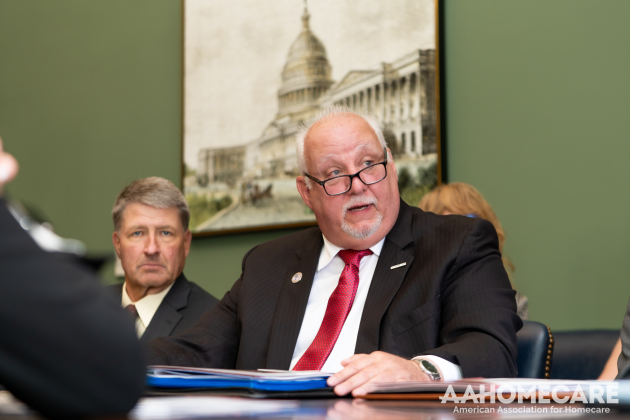
AAHomecare is working with committees of jurisdiction and Congressional champions to advance legislative solutions addressing CBP. At the recent Washington Legislative Conference, grassroots advocates held Congressional meetings demonstrating the strength of coordinated engagement.
Engaging the Media 
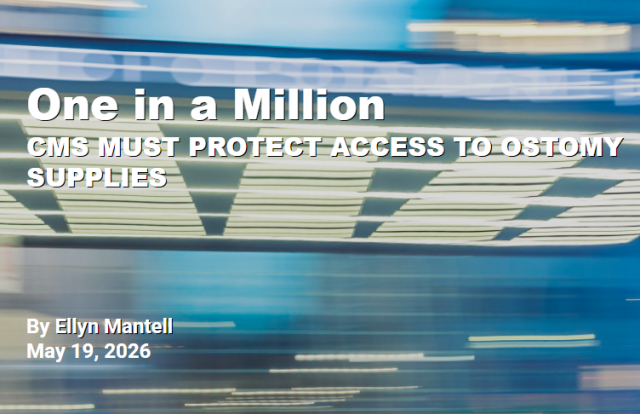
AAHomecare is working with ostomy and urological stakeholders to ensure end users, clinicians, and industry voices are reflected in national conversations about CBP policy. Media coverage and public awareness efforts help elevate these issues, including coverage of ostomate Ellyn Mantell in RealClearHealth and catheter user/supplier Madonna Long in the Washington Times.
CBP FAQs
Have Another Question?
We're here to help. Reach out to our team for more information about CBP and how it may impact your business and patients.
CBP Resources
CBP Advocacy & Education
- H.R. 10787 - Support Legislation to Protect Urological and Ostomy Patients in Medicare
- Competitive Bidding Essentials Webinar
- CBP Bid Calculator – CGMs & Insulin Pumps Webinar
- CBP Bid Calculator – Ost, Uro, & Hydrophilic Webinar
- CBP Bid Calculator – Braces Webinar
- Understanding the Bid Process
- Overview of the Final Rule Competitive Bidding Changes
- Summary of Key Rules for CBP by Brown & Fortunato
- Why suppliers need real cost data before they bid - or sign
Letters & Comments
- AAH Comments on the Proposed Rule (Aug ’25)
- AAHomecare Briefing with Concerns on RID CBP
- Industry Letter to CMS (Oct ’25)
- House/Senate Diabetes Caucus Leadership Letter to HHS (Oct ’25)
- Dunn/Murphy Congressional Letter to CMS & OMB (Oct ’25)
- Meuser/Miller-Meeks Congressional Letter to HHS (Oct ’25)
- AAH Comments on CMS-1844P